
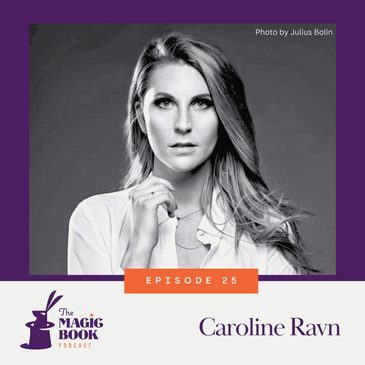
Professional magician Caroline Ravn discusses her book, "The Business Side of Show Business," and shares expert advice on building a sustainable career.
Adrian Tennant [00:00:03]:
Coming up in this episode of The Magic Book Podcast
Caroline Ravn [00:00:05]:
They told me, “oh, sorry, we did not have time to go to the airport to pick up your luggage.” And I was like, “Wait, wait, wait, what?”
Caroline Ravn [00:00:13]:
I have no show, nothing to wear, no makeup, no nothing. And we have two and a half
Caroline Ravn [00:00:17]:
hours to put together a show.
Caroline Ravn [00:00:18]:
But what this taught me though, is
Caroline Ravn [00:00:20]:
that most people who has dabbled in stage magic before, we can put together a show in 30 minutes if we need to.
Adrian Tennant [00:00:28]:
You're listening to The Magic Book Podcast, conversations about classic and contemporary books that teach, illuminate, and celebrate the art of magic. I'm your host, Adrian Tennant, a lifetime student of magic and mentalism, occasional performer and longtime book collector. Thanks for joining me. Today, my guest is Caroline Ravn, a professional magician in mc. Author and entrepreneur, Caroline grew up in southern Sweden and spent over five years studying theology with the intention of becoming a minister, a path she ultimately traded for the stage. Since making that leap, Caroline has built an impressive international career performing interactive stage shows and close up magic that blend humor, storytelling and audience participation in both Swedish and English. She's won titles at the Swedish and Nordic Magic Championships, been named Inspiration of the Year, and performed sell out shows in Stockholm, Gothenburg, Amsterdam, Oslo, New York and Las Vegas. Beyond performing, Caroline is a five time TEDx speaker, the founder of the Magician's Book Club, and the creator of the acclaimed Ravn branded playing card series with over 40,000 decks sold worldwide.
Adrian Tennant [00:01:53]:
Caroline is also the author of the book the Business side of Show Business how to Make a Living on Stage, which is a comprehensive guide for magicians and entertainers who want to build a real career from their art.
Adrian Tennant [00:02:10]:
[MUSIC] Caroline, welcome to The Magic Book Podcast.
Caroline Ravn [00:02:14]:
Thank you. What a fantastic name for a podcast.
Caroline Ravn [00:02:17]:
Great job.
Adrian Tennant [00:02:18]:
Thank you. You grew up in southern Sweden and it was your grandfather who got you interested in magic. What was it about watching him that
Adrian Tennant [00:02:30]:
first made you think, I want to do that?
Caroline Ravn [00:02:32]:
I don't think there was ever something that he did that made me think that this was a possible career.
Caroline Ravn [00:02:37]:
If I'm being honest, it was more
Caroline Ravn [00:02:38]:
like I loved the ability of getting
Caroline Ravn [00:02:42]:
people into a state of wonder because I didn't see that anywhere else. You know, I have four siblings and on my dad's side I had five cousins. And so that was like everybody was attached to my grandpa, obviously on that side, and. And I was the only one who did magic.
Caroline Ravn [00:02:58]:
So for me, this was like our own little universe. But I never thought in a million
Caroline Ravn [00:03:03]:
years that this could be a career. And it's just fantastic. And I have to pinch myself still, even though I've been doing this full time now for 12 years, that this is possible.
Adrian Tennant [00:03:13]:
Actually, before magic became your career, you spent over five years, I understand, studying theology with a genuine intention of becoming a minister.
Adrian Tennant [00:03:25]:
Caroline, what drew you to that path?
Caroline Ravn [00:03:28]:
Oh, there are so many things, But
Caroline Ravn [00:03:30]:
I think it all started with me
Caroline Ravn [00:03:32]:
being quite outside of the community when
Caroline Ravn [00:03:35]:
I grew up, because I believe that
Caroline Ravn [00:03:37]:
I have a lot of ADHD that
Caroline Ravn [00:03:38]:
is, you know, not diagnosed and not controlled in any way. And that didn't, you know, help in me growing up, really. So I was one of those kids who did not really fit in too well. And magic didn't make me cooler, even though you would assume so. I felt like I kind of needed
Caroline Ravn [00:03:57]:
somewhere else to go. And when I grew up, there was,
Caroline Ravn [00:04:00]:
like, not too many things to do.
Caroline Ravn [00:04:02]:
When you were 14, 15 years old, it was a very small town. And I got this letter home from the church, and it said, it's time for you to do your confirmation, like, in the church. And I was like, oh, what is this? We had never talked about God or
Caroline Ravn [00:04:15]:
Jesus at home at all. So I was like, yeah, sure, let's do that. So I signed up because it had
Caroline Ravn [00:04:23]:
this cool camp where we were supposed to go on a big sailboat, and
Caroline Ravn [00:04:27]:
I was like, who doesn't want to go on a sailboat? I ended up going, and I loved it.
Caroline Ravn [00:04:32]:
It was phenomenal, and it was so good and so engaging, and I felt so seen by everybody there. So when they then asked me later if I wanted to become, like, a leader for the next group, I was like, okay, okay, what do I have to do?
Caroline Ravn [00:04:45]:
I have to bring out pension and
Caroline Ravn [00:04:47]:
I get an extra bun.
Caroline Ravn [00:04:48]:
Sign me up. I was so ready for this challenge, and I also had to go back on the sailship. Yay.
Caroline Ravn [00:04:55]:
So I started doing that, and it kind of just became more and more absorbed in my life, like, what I wanted to do. And I was so invested in the ship that when they decided to launch ship number five, I decided to join the ship.
Caroline Ravn [00:05:09]:
And then after, you know, I graduated
Caroline Ravn [00:05:11]:
from high school, and I didn't really know what to do, so I was like, “Okay, maybe I continue in church.” So I did, and it was fun, and that was seen. And all of a sudden, I'm, like, so invested in this world, you know, I don't know if you're religious or your listeners are religious, but I feel like religion is so much like a language that if we don't use it all the time, we're going to lose track of what it is. But for me, it was like, we're only speaking religion so much now. So I was so, you know, excited and wanted to be part of this, since I didn't really have anything else to be part of. So that's why I ended up in church. But why I decided to take out five and a half years of studies
Caroline Ravn [00:05:52]:
and loans and all that kind of
Caroline Ravn [00:05:53]:
stuff, that beats me.
Caroline Ravn [00:05:54]:
Maybe I'm just, you know, too stupid to realize sooner. But now I've sold my soul to Satan for card tricks, and it feels good.
Adrian Tennant [00:06:03]:
When we were preparing for this interview, you mentioned to me that you had a twin who passed away at birth, sadly, and that your parents then had twins again two years later. Caroline, how did that very particular family dynamic influence your interest in magic and performing more generally, do you think?
Caroline Ravn [00:06:24]:
I'm not sure that that particular part did. However, when I had twins myself, that's
Caroline Ravn [00:06:29]:
when I was like, “This is insane!” Could you imagine, though? Like, I was so excited when I heard I was having twins, I literally saw my career skyrocketing, and out they come. And they do not look alike, which
Caroline Ravn [00:06:42]:
is a shame, but also good for their childhood.
Caroline Ravn [00:06:45]:
But I think also one of the
Caroline Ravn [00:06:47]:
reasons that it might have affected me is because it was always lonely. If anybody listening to this might have a twin themselves or know people who are twins, they are very linked in a way that is hard to understand. Like, let's just take my brothers, for instance. One of them is in the military. The other one is not. And the one who is not, he lives in a home because he has psychological problems. He's probably schizophrenic, but he doesn't have a diagnosis yet. But he is very much in his own mind.
Caroline Ravn [00:07:16]:
And I remember a few years ago, my brother was in Mali with the UN to do, like, a big mission. And in the middle of the night, this brother who's back home, he keeps ringing everybody up. He's like, “Our brother is in danger. Our brother is in danger.” And we were like, “No, no, he's not.”
Caroline Ravn [00:07:33]:
You know, “He's away on a mission”
Caroline Ravn [00:07:34]:
“and he's totally fine.” The next morning, we found out that they had been attacked in his camp. So, like, he had this feeling, you know, you can't put any words on this. And I see it now with my twins, too. Like, they have this connection, the bond. And maybe that's why I felt so lonely growing up, because that was taken away from me. So maybe I needed to become a performer. You know what? We can cancel my therapy now.
Caroline Ravn [00:07:59]:
I think we've solved it.
Caroline Ravn [00:08:02]:
So many years of therapy, and here we are.
Adrian Tennant [00:08:05]:
Well, you also described your dad as being your biggest supporter. Now, he had a career in politics. What was his relationship with your magic career specifically?
Caroline Ravn [00:08:18]:
Oh, he was my biggest supporter, man. And I think he was a little disappointed when I said I wanted to become a magician, since his dad was a magician and not a very professional one and not very successful. So when I said that I wanted to become a magician, he was like, “Okay, let's give this a year and just see what happens, you know?” And he started taking care of everything else, basically.
Caroline Ravn [00:08:40]:
So he drove me to places I didn't even know existed, and whenever we
Caroline Ravn [00:08:44]:
went out shopping for food, he always paid. And, you know, he really supported that
Caroline Ravn [00:08:48]:
first year in business to ensure that I really got the best experience possible. And so that was really good for me. And I think looking back into his life and the part he played, I don't think I realized until kind of recently because it was two years ago since he passed as of recording this. So about a year ago, we went through his phone, which felt so personal and private, you know, but we wanted to clear it out. But first of all, I wanted to, like, look through the photos. Maybe there's something that we want to keep. And I really hope my siblings are
Caroline Ravn [00:09:21]:
not listening to this episode because 95%
Caroline Ravn [00:09:24]:
of the photos are either of me
Caroline Ravn [00:09:26]:
or of my Facebook updates or things
Caroline Ravn [00:09:29]:
that he had driven me to. He was such a big supporter and so dearly missed. And it really breaks my heart every day seeing my twins growing up and knowing that they will never know the greatest man that I knew.
Adrian Tennant [00:09:42]:
Well, Caroline, you did become a full- time magician.
Caroline Ravn [00:09:48]:
I did. Isn't that crazy?
Adrian Tennant [00:09:49]:
Now, in your book, you describe that first year in business as a year of learning and of rejection. What did that look like for you?
Caroline Ravn [00:10:00]:
I ran on everything. Like, every single opportunity that I saw, I just decided to go all in. And I'm so glad I did, because what I learned was people talk about this in entrepreneurship all the time. Like, your net worth is in your network. And I believe that to be true for entertainers too.
Caroline Ravn [00:10:18]:
And I use my kids for this. Like, every single opportunity that I get, I bring them to the park and I tell everybody that they're playing around with their parents. I'm like, “Yeah, I actually do magic for a living.” And you know how many gigs I've gotten this way?
Caroline Ravn [00:10:31]:
Just telling people you do something for a living is fantastic. But that first year I wasn't very good. I wasn't, you know, the best performer. I didn't have a script. I didn't really have an outfit. I didn't have anything and created. I didn't know that you needed a contract.
Caroline Ravn [00:10:46]:
Nobody told me you needed a contract.
Caroline Ravn [00:10:49]:
So for me, it was like trial-and-error for everything that I did. But I realized very early on that one thing that really separated all the good entrepreneurs out there was how much they networked. So I decided to be part of every single one that I could find, and it ended up being the best investment of my time. But I still can't do the center deal, I'm sorry!
Adrian Tennant [00:11:10]:
Were you still in the small town that you'd grown up in at this point or did you move to Stockholm?
Caroline Ravn [00:11:16]:
I stayed there for a few years, so I moved to Stockholm in 2016.
Adrian Tennant [00:11:21]:
Got it.
Adrian Tennant [00:11:23]:
[MUSIC] If you're enjoying this episode of The Magic Book Podcast, please consider leaving a rating on Spotify or a review on Apple Podcasts. You can also follow The Magic Book Podcast page on Facebook. Thanks.
Adrian Tennant [00:11:37]:
Caroline. Let's talk about your book, “The Business Side of Show Business.” Now, before we get into the content, I want to ask you about the book's origins. Earlier, you shared with me that you finished the entire manuscript in just six weeks, which is amazing, but it coincided with a period that your dad was in his final illness, if you're comfortable doing so. Can you talk about that period?
Caroline Ravn [00:12:04]:
Yes, of course. So it all started with my 10-year anniversary as a full-time performer came up.
Caroline Ravn [00:12:12]:
So we were in Egypt with my
Caroline Ravn [00:12:14]:
kids and they were napping, my partner was napping, and I can't nap because
Caroline Ravn [00:12:17]:
I have never learned how to. So I decided I was going to, you know, think about things that I wanted to do for the upcoming year.
Caroline Ravn [00:12:24]:
And I looked through the calendar and I saw, “Oh, my 10-year anniversary as a performer is coming up in a couple of weeks. So what is one thing that I wish that the magic community had given me when I started?” And I was like, “Okay, wait, this is a book. Like, I need to write a book.” So I started writing down just some, a few ideas, you know, the contracts and the networking and all the things that I could think of that I wish that somebody had told me. Maybe not the first year, but maybe definitely the first five, you know. And so I did. And it kind of took an hour or two to get kind of the timeline of all the things I wanted to get in there. So then when my partner woke up,
Caroline Ravn [00:13:01]:
he was like, “What are you doing?” And I said, “I'm writing a book.” And he's literally zero surprised at this. He's like, “Okay, we're on holiday. This checks out,” you know. And so I told my dad, who...
Caroline Ravn [00:13:12]:
He passed away from ALS. So he, .he was verbal until, like, he wasn't. So it was very quick at the end. So from first, like, nibbles in his hand until he passed was only 13 months. So it was super fast. And we were told that he would have, you know, three or four years. So for us, everything was like a shock.
Caroline Ravn [00:13:30]:
It went so quick. So then this was in mid January when I started the book. And then just six weeks later, I finished the thing, which felt weird, but it was important to me because my dad had always told me, like,”You're such an overachiever.”
Caroline Ravn [00:13:47]:
“You never really finish things.”
Caroline Ravn [00:13:49]:
“You start a million projects at the same time.”
Caroline Ravn [00:13:51]:
And one time he told me that it's like he's giving me all of
Caroline Ravn [00:13:54]:
these ideas, and I toss them up
Caroline Ravn [00:13:56]:
in the air and I close my eyes and I hope that somebody catches one of them so I can run with that, you know?
Caroline Ravn [00:14:02]:
So that's kind of how he described my life. And he wasn't wrong. He wasn't wrong. And it was like 10 days before he passed, so two days more he had when he was still awake, and I went to his bedside. He was not verbal at this time. And I said, “I finished the book.” And you could see it in his eyes. He was so proud.
Caroline Ravn [00:14:21]:
Like, I finally finished something, and I
Caroline Ravn [00:14:23]:
was so happy that I'd be able to tell him when he was awake and, you know, conscious of what happened. So inside the book, there is a little dedication to my dad, and it felt important to put it in there.
Adrian Tennant [00:14:35]:
Very nice. Well, right from the start, you make a very deliberate promise to the reader. “The Business Side of Show Business” contains zero magic tricks.
Adrian Tennant [00:14:47]:
Just business, right?
Adrian Tennant [00:14:48]:
And it opens with what you call your offer foundation, the idea that a performer needs to think of themselves as a product with a clearly defined unique selling point, or USP. Caroline, can you explain what you mean by that?
Caroline Ravn [00:15:05]:
So a USP, a unique selling point, is basically what separates us from another performer. So if we think about this from the perspective of a booker or an agent or an event planner, is that they have a need to fill. They need to find a magician or a entertainer. So what do they do? They go on maybe socials, but definitely Google. So they start looking like, “What do we have here?” And then maybe they have three to five different options to pick from. And our USP is what sets us apart from these other magicians. So for many, it's going to be, “I'm the youngest,” “I have the most awards won,” “I am the world's greatest at this and this thing,” or for
Caroline Ravn [00:15:45]:
many of us, “I have this amazing hairdo.” You know, it feels like that's a thing for magicians. Like, we have crazy hair. Hashtag Murray. But, you know, we tend to do that.
Caroline Ravn [00:15:54]:
But we need to separate ourselves from the competition. Right. And I do hate to say that I am a female magician, but as of recording this, it is still a thing for me to be unique with, unfortunately. But it does bring in good money to me, so that's good news. So I'd be stupid to not run with this. So definitely on my website, you're gonna see a more feminine touch, a more feminine font on the text. You're gonna see, you know, more modelly photos than you would see on a man's, like, Instagram and website.
Caroline Ravn [00:16:26]:
And to me, it makes sense because that is a unique selling point and that is what a client is looking for. So the clearer we can be in building our foundations like this, the easier it is going to be for us to be booked later on. And I'm so glad that I had built all of this already. So when my dad passed, all of this was already done, you know, so during the time I was grieving and people reached out to me to book something, I knew that I had the texts were ready, the offers were ready, I had my press kit ready. So it was literally just one push of a button because it's all in a Dropbox file, so I could just send it out. You know, life is going to happen to all of us. Even if it's somebody who passes away or there's a pandemic, or we get kids or. Or whatever happens, we're all gonna be hit by life.
Caroline Ravn [00:17:11]:
And I think, especially for us, who wants to do this full-time, the more prepared we can be, the less we have to work. And that's kind of the life I wanna live, especially now that I have the kids. So the easier I am to work with, too, the easier it is for a client to recommend me later; “So she was, like, so amazing to work with. She literally just had everything sorted out.” And not being the type of person who the client needs to wait for five days for them to get back to you, that's not the kind of person that they want to work with, especially if they're planning a big event.
Adrian Tennant [00:17:41]:
Right. Well, you also have some pointed things to say about how many magicians present themselves. So, Caroline, what are some of the most common mistakes you see performers making?
Caroline Ravn [00:17:54]:
The number one most common thing, and
Caroline Ravn [00:17:56]:
I hate this so much, is that we land all the things on our website.
Caroline Ravn [00:18:00]:
So if we do kid shows, we
Caroline Ravn [00:18:02]:
do corporate shows, we do keynote speaking, we do not want that to be on one site. So if you are a corporate booker, please ensure that your site just says that, like, we're buying the corporate show. But if you are trying to sell a kids show, then all of your photos on your website needs to be very vibrant and, you know, happy children, maybe balloons in the background and look at clowns. How do they do this? So the more we can ensure that we're coloring up this world of what we're selling, the easier it is because a client is going to have a very limited time on your website because they're shopping around at this point. So the clearer we can be, the better it is. And for me, I do mainly corporate events and big gala shows and stuff like that. So if you go to my website, that's what you're going to see. There is not going to be any photos of me performing for kids or the elderly or anything like that.
Caroline Ravn [00:18:52]:
It's just going to be in a very professional setting.
Adrian Tennant [00:18:55]:
Great advice. Now, before your book, you wrote a piece for “The Hermit” magazine called “Leave Your Dove Pan at Home,’ in which you describe a networking dinner – there's that networking thing again! – where you deliberately didn't perform a single trick, yet still somehow walked away with a pretty interesting sponsorship. Can you share that story?
Caroline Ravn [00:19:20]:
Yes. I hope you guys are sitting down for this. So I went to a networking event.
Caroline Ravn [00:19:25]:
I've been part of multiple different networking things, but this was my favorite one. It's only in Sweden, unfortunately, but it's called BEN. And we went out to this beautiful dinner. It was at a spa, and we had a great time. And I'm sitting next to the marketing chief of a big car rental place. And, you know, we're having a good time. We're sharing a few drinks. I don't normally drink alcohol, but I
Caroline Ravn [00:19:48]:
saw, you know, this could be a good exception to that rule just to
Caroline Ravn [00:19:52]:
hang out with these people. So I'm sitting at this table after a while, just having dinners, having a few drinks. And I tell this guy, Stefan, “You know, Stefan, I'm actually going to go out on tour in a few months. You should totally sponsor me with the car.” And he says, “I should stripe it too.”
Caroline Ravn [00:20:07]:
And I was like, “Yes.” And so under the table, I'm texting my agent: “Stefan just agreed to give me a sponsored car and it's going to be striped too.” Send away. And then the next day, my agent calls me.
Caroline Ravn [00:20:19]:
She's like, “What are you saying? Are you going to get a car?”
Caroline Ravn [00:20:21]:
“You don't even have a license.” So I didn't have a license. So as we were going into their office to sign off of this beautiful car that I got, it was a Mini Cooper.
Caroline Ravn [00:20:33]:
So as I'm signing it, I go, “So, Stefan, is this a good time to tell you I don't have a driver's license?”
Caroline Ravn [00:20:39]:
Just laughing, you know, and he was like, “Haha, of course you do.” And I was like, “No, I really don't.” And then two weeks later I had a driver's license. So that's kind of the way I run my life.
Adrian Tennant [00:20:50]:
It's amazing to me that you did that without having a driver's license. But that story captures something that runs through your whole book, that a genuine conversation about someone else's problem is worth far more than an unsolicited card trick. And it's actually something very similar to what Justin Higham talked about when he was a guest on the podcast back in February. So I'm curious, how do you teach that instinct to someone who's conditioned to lead with their magic?
Caroline Ravn [00:21:23]:
I think it's a good idea to just always have your eyes and ears open.
Caroline Ravn [00:21:27]:
So let me give you a thing that happened just a few weeks ago. I was about to go to Blackpool
Caroline Ravn [00:21:33]:
to do a lecture and a show, which was fantastic. And I hired a PR agency to help me with a promotion of this, because I knew I was the first female in Scandinavian history to be able to go to Blackpool to do this thing. And I'd be stupid not to try to ride the wave that I did. So I did a lot of interviews for, like, the biggest magazines and newspapers, and I was on the biggest TV morning show. I did a bunch of different things to, like, highlight this amazing thing that I was about to do. And then I think I left Sweden on the Wednesday, so it was a couple of days before, maybe on the Monday. The biggest morning radio show is talking about magicians on their show. And I was like, “Oh, this is fun”
Caroline Ravn [00:22:14]:
you know, And I keep listening, and the girl and the guy, they're
Caroline Ravn [00:22:18]:
saying things like, “This is not magic.” Like they're talking about card tricks, you know, “this is not real magic. But whenever there is a signed bill inside of a lemon, then that's real magic,” you know?
Caroline Ravn [00:22:28]:
And as a magician, you're just sitting back and like, “Oh, that's so funny how laymen think.”
Caroline Ravn [00:22:32]:
And then the girl says, “Is there one female magician in Sweden?” And the guy responds, “Probably, but if we have one, she's not going to be any good.” Break for commercial. And I'm like, “Oh, my God, the timing on this could not be better!”
Caroline Ravn [00:22:49]:
Literally flying to Blackpool in a couple of days. So I go on LinkedIn and I
Caroline Ravn [00:22:54]:
write about the story about how I loved the morning show and then added the “And then it happened,” you know, and their exact quotes. And then I said, “So please let me introduce myself to the population of Sweden.” And I gave a few highlights of my career and what it is that I do, and then bragged about being the first female to do this thing from Scandinavia in Blackpool and how big that is. And then I closed it off with saying, “My biggest goal in my career is to be the host of the Eurovision Song Contest. Or maybe that the hosts of this-
Caroline Ravn [00:23:25]:
and-this morning show on the radio
Caroline Ravn [00:23:27]:
will know who I am.”
Caroline Ravn [00:23:29]:
And as I am standing at the
Caroline Ravn [00:23:31]:
gate, literally at the gate, flying to Manchester to join the Blackpool thing, they're calling me from the morning show and they go, “Oh, so we saw the
Caroline Ravn [00:23:38]:
thing on LinkedIn, we heard you're amazing.”
Caroline Ravn [00:23:40]:
“Could you please come be on the show?” I haven't been yet. I'm going to be in three days from recording this. And so I think the more we have our eyes and ears open to everything that's happening around us, the more of these opportunities are going to kind of fall into our laps this way. And the same thing goes, if you're a performer of any kind and you go out and you do a show at their office, this is my greatest piece of advice for anybody who wants to do more like newspapers and magazines.
Caroline Ravn [00:24:06]:
So if you're doing a show or
Caroline Ravn [00:24:08]:
walk around in any office, go into the kitchen after the show and go through all of the magazines that they're currently subscribing to. You go in to page … I think it's either two or four. Usually they're going to have a list of all of the journalists that will work at this magazine. You find all of them on LinkedIn and you tell them, “I did this and this show at this and this company. I heard that they're a subscriber. Fantastic. I'm a magician.”
Caroline Ravn [00:24:35]:
“I would love to do a piece with you.” And the more you can connect this to what the value proposition is of the magazine and connect it maybe with the people you were doing the show for the easier it is for you to kind of be able to go into that magazine. I've gotten so many interviews this way and that's a fantastic way. Just having your eyes and ears with you at all times.
Adrian Tennant [00:24:54]:
It's really interesting that you talk about keeping your eyes open. Of course, a lot of that happened because of social media. And you're very clear that different platforms serve of different audiences. You make a very strong case for LinkedIn as possibly the most important platform for anyone targeting corporate clients. And we also saw in this story there how it played out really well. Beyond LinkedIn, where do you think magicians maybe are wasting their time online?
Caroline Ravn [00:25:24]:
I think many of us are wasting time just scrolling social media and thinking
Caroline Ravn [00:25:28]:
that that would be a good reel
Caroline Ravn [00:25:29]:
for me to create and then we don't do anything with it. If you are somebody who wants to be, you know, seen more than we are, I think it's a good idea to have a plan like you don't
Caroline Ravn [00:25:39]:
have to post every day if you don't want to.
Caroline Ravn [00:25:41]:
But definitely for my Instagram. My Instagram is like showcasing the opportunities that I get because I am, again, I hate to say this, but I am a female magician and I'm also a mom. You know, how do I combine those two worlds? So I share that on Instagram. Trying to be an inspiration to anybody who wants to go full time in any sort of niche. But also for women who want to do both, you know, they want to have a career, they also want to have kids. I made it work with twins. You know, they should have named them
Caroline Ravn [00:26:10]:
Siegfried and Roy when I had the chance. Really should have, but you know, my partner wouldn't let me. So what are you going to do? But definitely try to separate what it
Caroline Ravn [00:26:20]:
is that you want to do. It wouldn't make sense for me to start putting things on my Instagram that is not related to either my family life or to my work life. However, if we just look at LinkedIn again, it wouldn't make sense for me to post photos of my kids on LinkedIn. And actually it was right. When I was flying home from Blackpool, I did a newsletter for my Swedish audience because I have two different ones and I wrote like it was so amazing at Blackpool at such a good time. It's going to be such a big contrast flying home and, you know, starting
Caroline Ravn [00:26:50]:
folding the laundry for my four-year-old twins. And I hadn't mentioned in the newsletter
Caroline Ravn [00:26:56]:
in such a long time that I have children. So I got so, so many responses.
Caroline Ravn [00:26:59]:
They were like “Oh, my God, I didn't know you have kids.” And the same thing happens on LinkedIn.
Caroline Ravn [00:27:04]:
The very few times I share anything about the kids, they all say the same thing. “Oh, we didn't know that you had children” because it doesn't matter on these platforms. It does matter on Instagram because I want to share that story. But on LinkedIn, I just want to ensure that people understand that I am an entertainer for hire. That's what we want. And I showcase my TED talks. You'll even see it when you go into my LinkedIn. You see my name, professional magician, Emcee, 5-times TEDx speaker, and I now added “author” because how awesome.
Caroline Ravn [00:27:33]:
I wrote a book, accomplished person. But you know, you can see the
Caroline Ravn [00:27:37]:
differences when you go through them. And for me also, YouTube is very important because of the book, but also because of my coaching. So the book was the first thing that happened. And then as a consequence, I started coaching other entertainers who could read what to do in the book, but they didn't really know how to do it. So I created a program and the way that I sell the program is through YouTube most of the time.
Adrian Tennant [00:28:02]:
Well, of course, you have a very large following on YouTube. For performers who haven't thought about YouTube as a business tool, how do you generally recommend approaching it?
Caroline Ravn [00:28:13]:
There are different ways to make money on YouTube. The most common one is, or I think the most common that people think is, AdSense. And that's basically when you get paid per view on YouTube. But there is a way easier way to start earning money, even if you don't have a thousand subscribers and 4,000 watch hours or whatever it is that they're currently asking you to have. And that is to go into affiliate marketing. And affiliate marketing, for those of you who do not know what this is, that's basically you recommending something that you already love and use.
Caroline Ravn [00:28:43]:
And I created a video three-and-a-half
Caroline Ravn [00:28:45]:
maybe even four years ago now about Epidemic Sound. And Epidemic Sound is a sound tool that I've used for years and years. It's fantastic. It has background music, it has with lyrics, it has sound effects, all the things. And so I had the opportunity to sign up with them as an ambassador so I could then share an affiliate link. This means every time that somebody clicks my link and signs up to use the service, I get a kickback. And Epidemic Sound is such an amazing, you know, partner to have because they give you 50% for the entire first year that somebody's a client of the entire money brought in. So it doesn't cost the consumer anything.
Caroline Ravn [00:29:24]:
However, I get paid properly for sharing my ideas or my thoughts about this program. So till this day we're talking years later, it still pays me at least $1,000 every single month from this one video because of affiliate marketing. So if you are an entertainer wanting to make extra money on YouTube, if that's the goal, because we're talking business here, what is something that you can sell? If we're a juggler, let's say you can have a link to Amazon because Amazon has a fantastic, I think it's called Associates program and you share the link and you'll get a kickback every time somebody purchases the same juggling things that you have. And what's even more amazing with using Amazon is that they have like a tracking system. So if somebody goes in through your link, everything that they purchase within, I think it's 24 hours on Amazon because it's tracked, will still get benefits to you. So it's a no brainer to me. Like if you are somebody who likes being in front of a camera, why not? It's a fantastic way to just make extra passive income.
Adrian Tennant [00:30:26]:
Well, part 8 of your book is called “Making Extra Money as a Magician.” And in addition to affiliate links, it covers merchandise and diversified income. Now you have a very personal relationship with that topic. Your Ravn playing card series has sold over 40,000 decks worldwide. Caroline, what have you learned about being an entrepreneur?
Caroline Ravn [00:30:53]:
Oh, wow.
Caroline Ravn [00:30:53]:
Where do we start?
Caroline Ravn [00:30:55]:
What have I learned about being an entrepreneur? It's fun.
Caroline Ravn [00:30:57]:
You know, up until like a week ago, I was the vice president of
Caroline Ravn [00:31:01]:
the entrepreneurial network here in my town.
Caroline Ravn [00:31:04]:
And I love it. I love ideas. And just, you know, spreading the entrepreneurial
Caroline Ravn [00:31:10]:
feeling in the community is amazing. Like whenever somebody shares an idea with me, I'm like, “Okay, let's make this happen. Let's create a logo.”
Caroline Ravn [00:31:17]:
“Let's, you know, create a business plan,” and we do it together. And it's so easy now because we
Caroline Ravn [00:31:22]:
have so many tools. Like we have lovable, we can create apps in hours. In Canva, we can create a logo in seconds. With ChatGPT, we can create, you know, copy that we need if we wanted to, it can go so quick. We just have to dare to take that extra step. So I love that. And also the playing cards kind of
Caroline Ravn [00:31:42]:
helped me through the pandemic because, you know, it was a terrible time to do card tricks really.
Caroline Ravn [00:31:48]:
So I had one of my best investments like in time and creating stuff during the pandemic because of the cards. I think we raised over a hundred thousand dollars during that period. So that was amazing.
Adrian Tennant [00:32:01]:
Very good. Well, your book is also very honest about the emotional and physical cost of a full-time performing career. The seasonality, the feast and famine, the pressure of always being on. You shared with me that you were actually back on stage just four days after your father passed away. What does “the show must go on” mentality actually cost a performer, do you think?
Caroline Ravn [00:32:32]:
Oh, it all depends. But for me, I canceled one show when he was in hospice because I knew that I couldn't do it. But I've never canceled a show before or after that fact. For me, it's kind of our responsibility too, because we are selling a professional service and not showing up is terrible. So what I always have, when I have a big opportunity or like a big gig coming, it's a gala show or it's like an awards night or something, I always ensure that I have a backup. Because if something happens to me and I can't be there for any reason, there's always a backup. And same thing. After I had my twins, I had
Caroline Ravn [00:33:10]:
a show booked three days after, after they arrived, but I didn't know that there was going to be an emergency C-section. I was thinking, “Let's pop them out, Momma’s going to go to a show and I'll be back.” But obviously I did have a backup. He ended up going because of the C-section. But yeah, I think it's good and bad. You know, in that moment where I
Caroline Ravn [00:33:31]:
had just lost my dad, I felt like I was just everywhere emotionally, you know, it was. I wanted to be home because I was on a cruise. Like I literally flew on a cruise two days after he passed. You know, the cruise was good for me in so many ways because I had so much time to reflect and think and cry and do all the things. But when I was about to go on the show, I started feeling like kind of panic thoughts. Like I never had panic attacks or anything like that, but it was just like pounding and it was a scary moment. I usually get nervous before a show because it means I still care, you know, but it was in a different way. And as soon as they had said my name and I walked out on stage, I was back into being a jumbo jet.
Caroline Ravn [00:34:14]:
Because we are performers and we are these performers who want something for the audience. So I think the more we can remember that, like why we do the kind of stuff that we do, the easier it is going to be for us to kind of go over these extremes that are going to happen. To us if I remember anything from that show? Funny you should ask.
Caroline Ravn [00:34:34]:
Not a single moment. I don't remember anything. I just remember the feeling of “I did this.”
Caroline Ravn [00:34:41]:
I felt like I was in my element, but I don't remember any specific moments.
Adrian Tennant [00:34:47]:
Just a reminder that you can be notified when new episodes of this podcast are published by subscribing to the email alerts. You'll find all the details on the podcast website at themagicbookpodcast.com which is where you can also find transcripts plus accompanying blog posts with summaries, timestamps, and links to resources mentioned in each episode.
Adrian Tennant [00:35:07]:
Caroline, “The Business Side of Show Business” started as a self-published project, but is now available through the publisher Collective Ink. What led you to work with your publisher?
Caroline Ravn [00:35:24]:
The guy who owns the publishing company, Collective Ink.
Caroline Ravn [00:35:27]:
He's a magician. Yay!
Caroline Ravn [00:35:29]:
So we actually met at a magic convention. As I was writing it in the
Caroline Ravn [00:35:34]:
beginning, I mentioned to him, I was
Caroline Ravn [00:35:36]:
like, “I'm writing a book, it's pretty cool.” And he was like, “Okay, that's cool.” I don't think that he knew what
Caroline Ravn [00:35:43]:
it was because it was still brand new.
Caroline Ravn [00:35:46]:
I literally just started writing it and
Caroline Ravn [00:35:49]:
he was like, “Yeah, maybe you can send it to me after.” And, you know, I finished the thing, my dad died, we had the funeral, and I published it as a PDF first and I sent it to him. And during the time that it was a PDF created and people started like taking notice, I was like, “Maybe I have to make some books.” So I printed a hundred books. And then he got back to me saying, “We would love to have this. Like, this would be amazing. And we have 70 plus countries that we work with and you'd be perfect for this.” And I was like, “Okay, how would this even work?” You know, And I trusted the process so much.
Caroline Ravn [00:36:28]:
And they had been so amazing, like literally from the first email until still, it's like, it's so easy to work with them. And it's been such a joy to have people around you that really cares about something that you care about.
Caroline Ravn [00:36:42]:
Because this is, at the end of the day, a little baby that I created and I'm very proud of.
Caroline Ravn [00:36:47]:
And having people to back it up, you know, that's. That's been fantastic. And they've done a great job because just fixing the text inside because I'm not dyslexic, but I'm not like super good at writing. English is not even my first language.
Caroline Ravn [00:37:00]:
And just having the notes, like the 16,000 notes or whatever they sent me, I was like, “Okay, good, good, good. Let's. Let's just accept all of these changes.”
Adrian Tennant [00:37:11]:
So interesting. Yeah, yeah. Of course, they were also the publishers of Justin Higham’s book. I'd like to ask you about the Magicians Book Club. You told me that it too started in 2020 during the COVID pandemic, initially as a handful of Swedish magicians reading Tarbell Volume 1 together on Zoom. So how did it grow into what it is today? A little bit larger.
Caroline Ravn [00:37:39]:
So it all started with a Facebook
Caroline Ravn [00:37:41]:
post by a friend of mine named Per.
Caroline Ravn [00:37:44]:
He was out in his summer cabin, and there was a photo of him reading Tarbell.
Caroline Ravn [00:37:49]:
And I was like, “Oh, I wish I had somebody to keep me accountable to read Tarbell.” And then he was like, because he's a teacher. So he was like, “That would be cool.”
Caroline Ravn [00:37:58]:
You know, few months go by, and I go, “Hey, Per, do you want
Caroline Ravn [00:38:01]:
to start a book club with me?”
Caroline Ravn [00:38:03]:
And he took this seriously. Like, he created, like, a curriculum and, like, a beautiful text file to send out to everybody.
Caroline Ravn [00:38:10]:
And I can't remember how many. We were maybe 12 or 15 Swedish
Caroline Ravn [00:38:14]:
magicians, and we met on Zoom, and he was the teacher, I was the enthusiast. So we had read, you know, a couple of chapters every week, and we
Caroline Ravn [00:38:23]:
started asking questions to create, like, this atmosphere of us sharing at times. We also had breakout rooms so we can discuss, you know, different tricks and methods. And so that was really cool. And I shared this on my Instagram. I thought it was fun, you know, and people were like, “How can we join?” And I go, “Swedish is a very
Caroline Ravn [00:38:42]:
small language, you know, and not everybody can join.”
Caroline Ravn [00:38:46]:
So I was like, “Maybe we do this in English, too.”
Caroline Ravn [00:38:48]:
So it was right after the kids
Caroline Ravn [00:38:50]:
had arrived, so it was maybe December 2021 or January 2022. I decided to go, like, all in to do this into a thing. And we had a couple of sponsors in the beginning to, like, help out, cover some costs, which was really good. I think for the first meeting, we had, like, 70 people join. So it was like, a lot of people wanted to read Tarbell, and because of Per, I had the curriculum.
Caroline Ravn [00:39:13]:
You know, I just had to translate
Caroline Ravn [00:39:14]:
it into English, which was fine. But now it's, of course, decreased because
Caroline Ravn [00:39:18]:
we've read so many books.
Caroline Ravn [00:39:19]:
We've read 45 books or something so far. So it's been a lot of books to cover. But it's been so fun because, you know, we read most of the books. It's in either four weeks or six weeks, depending on how long it is and what we've tried to do is at the end of the book, bring in the author, if possible, so we can have a discussion. You know, so we've had a lot of interesting people. Both Joshua Jay and Andi Gladwin has been there from Vanishing Inc. Which has been really nice.
Caroline Ravn [00:39:45]:
And then we had, you know, Asi Wind was there and we had Jim Steinmeyer was there to talk about “Hiding the Elephant.” Cause we didn't always read just magical theory books. We also read other books that are kind of aligned to magic. So that was kind of a nice book. If you haven't read that one, highly recommend because it shares the story of the magical things that happened, but in more of a novel way, which is nice.
Adrian Tennant [00:40:09]:
Yeah. Well, of course, earlier this year you appeared at the Blackpool Magic Convention as both a performer and a lecturer. Now, performing for a room full of magicians is a very different proposition from a lay audience.
Caroline Ravn [00:40:27]:
Yeah.
Adrian Tennant [00:40:28]:
What were those two experiences like?
Caroline Ravn [00:40:31]:
First of all, “why did I agree to do this?” It was. Oh, it was so scary. You know, I was in the middle of a mentalism routine for my first show and I see Banachek in the audience and I'm like, “I can't breathe in front of God!”
Caroline Ravn [00:40:47]:
You know.
Caroline Ravn [00:40:48]:
No, it was so weird. And, you know, seeing friends and seeing
Caroline Ravn [00:40:52]:
fans and it was crazy. So the first show, I was so nervous. Like, I've never performed for a room full of magicians before and I knew that they were there to enjoy my show, the experience, and it kind of felt so much pressure. So the first show I didn't enjoy, like, at all because it was just scary. And then we had a little break. And then the second show, it was 11 out of 10. It was so fun.
Caroline Ravn [00:41:20]:
I was, you know, in my element.
Caroline Ravn [00:41:21]:
It was great. So many of my friends came and I got to share some of my
Caroline Ravn [00:41:26]:
dirty lines that I can't do on corporate shows. It was very funny.
Caroline Ravn [00:41:31]:
So I had a great, great time. And then lecturing, I lectured about the book and about how to make money and just watching people out in the audience and thinking, like, most of these people, like 50%, like 60% maybe, they are professional magicians. So it was amazing for me to be able to share my experience and seeing how they all took notes. And I had the PDF, they got the PDF for free so they could scan the thing and get into a landing page and I can get their information. So now they're in my newsletters so I can sell them things later.
Caroline Ravn [00:42:02]:
Kidding. No, but it was amazing, you know, being able to share what I love
Caroline Ravn [00:42:07]:
so much and talk about entrepreneurship and how we don't have to be starving artists, we can actually be thriving entertainers if we want to. It's just a mindset shift, and it was like it clicked for them.
Adrian Tennant [00:42:19]:
Well, of course, you perform in both your native Swedish and English. Does working in two languages give you any insight into how differently audiences respond to magic across different cultures?
Caroline Ravn [00:42:34]:
Oh, yes. I'm lucky enough to work on cruise ships, too. And then I meet a lot of different audiences, you know, sometimes very mixed and sometimes very American or Dutch or English or whatever it is. And you see so many differences.
Caroline Ravn [00:42:50]:
Americans love magic, man. They really do. They, like, cheer, they're excited, they want to be part of the show. Whereas the Brits, not as excited, you know, a little more laid back. And the Germans and the Dutch, they
Caroline Ravn [00:43:05]:
can be kind of rude.
Adrian Tennant [00:43:06]:
Mm.
Caroline Ravn [00:43:06]:
It's very interesting to see how we react to things. And the Swedish audience can be very,
Caroline Ravn [00:43:13]:
like, also laid back, but it's like, we're not really taught to react in a strong way. So it's great for me to be able to, you know, experience the entire spectra of how we enjoy these things.
Adrian Tennant [00:43:25]:
You have a tip in your book about the “Lost Luggage Show” – that is a complete backup performance packed in your carry-on at all times. You mentioned cruising. I'm curious, has that ever actually saved a show for you?
Caroline Ravn [00:43:40]:
Four times.
Caroline Ravn [00:43:43]:
Yeah. I remember the first time I lost my luggage. It was terrible. It was also my fault because I was going on a ship.
Caroline Ravn [00:43:51]:
I was going to join my sister in South Korea.
Caroline Ravn [00:43:54]:
We were going to go on a
Caroline Ravn [00:43:55]:
cruise, we were going to go see the Great Wall of China, and it was amazing. And it was a gift from all
Caroline Ravn [00:44:00]:
of us in the family to give to my sister, who literally had zero
Caroline Ravn [00:44:04]:
things that she wished to do in her life except to go see the Great Wall of China. And because I was going on a cruise, the entire family, you know, pitched in for her to come. So that was an amazing gift. I flew from Stockholm to South Korea. She flew from Copenhagen, ended up in Thailand, and then flew to South Korea. Very messy day.
Caroline Ravn [00:44:21]:
We land in South Korea and then
Caroline Ravn [00:44:24]:
we meet up and my luggage is gone.
Caroline Ravn [00:44:27]:
And I was like, “Oh, no, what do we do?” And the reason was I had my
Caroline Ravn [00:44:31]:
camera, my camcorder was in my checked-in
Caroline Ravn [00:44:33]:
luggage, and I had forgotten to
Caroline Ravn [00:44:35]:
take out the batteries.
Caroline Ravn [00:44:37]:
Oh, no. So it was my fault.
Caroline Ravn [00:44:40]:
So I had to eat that up and I was going to join the ship in South Korea, you know, and then we were going to go on the cruise. So there was no way that we could get my bag from China in the right amount of time. So we were always playing, like, “Catch Me If You Can” kind of with my bag. Like, literally the same day, I was told that my bag was gonna come to the ship when I was gonna have my show. So they had postponed my show just to ensure that I would get my luggage in time. So in the morning, they told me, “We're gonna get your luggage at the airport. You're gonna be fine.” So I went out with my sister, came back, and then we were gonna have the rehearsal two hours later.
Caroline Ravn [00:45:16]:
And they told me, “Oh, sorry, we did not have time to go to the airport to pick up your luggage.” And I was like, “Wait, wait, wait, what?” Which means I have had the same clothes for five days. Five days.
Caroline Ravn [00:45:26]:
I have no show, nothing to wear, you know, no makeup, no nothing.
Caroline Ravn [00:45:30]:
And we have two and a half hours to put together a show. That's what you're saying? And they were like, “Yep.” I was like, “Oh, no!” Well, what this taught me, though, is that most people, if not everybody who has, you know, dabbled in stage magic before, we can put together a show in 30 minutes if we need to. If we really need to, and we're in a pinch, we can do this. So I started looking around. You know, I was doing book tests because I could find pocketbooks on the ship. There was a photo of Leonardo DiCaprio, so I forced Leonardo DiCaprio.
Caroline Ravn [00:46:01]:
You know, there was a deck of cards I could do close-up. There was coins, rubber bands. I did a magic square that they could use the projector so they can make it larger so we can all do this. And this show is actually recorded.
Caroline Ravn [00:46:14]:
It's hidden on YouTube, but it is recorded because I wanted to
Caroline Ravn [00:46:18]:
see what I could do within no time at all. So these few hours was to create the show, get ready, and also create all of the cue sheets and information for the technical team. I don't recommend this at all.
Adrian Tennant [00:46:33]:
But what a wonderful creative constraint in some ways. But maybe timing, not brilliant.
Caroline Ravn [00:46:39]:
Yeah. But to everybody listening to this, if you want to try, put yourself on a timer. Don't do 30. Maybe do 60 minutes and see what you can come up with. It's probably way more than you think.
Adrian Tennant [00:46:49]:
Now, you've given five TEDx talks, and you actually recommend TEDx in your book as one of the best ways to build credibility, especially with corporate buyers. For a magician who wants to get on that stage, where do they start?
Caroline Ravn [00:47:05]:
They would start on Google, just Google “TEDx near me.” You're going to get to a website where they list all of the TEDx that are available. You search for your city or your town or even your country, and there's going to be a list of all the places that's coming.
Caroline Ravn [00:47:21]:
Then you're going to click into any
Caroline Ravn [00:47:22]:
of those, find the organizers, because all of them are going to have an organizer. Most of them are connected to LinkedIn.
Caroline Ravn [00:47:29]:
So you press their name, go into
Caroline Ravn [00:47:31]:
LinkedIn and send them a message. That's the easiest way to do it. I was actually contacted a few weeks ago to do my sixth TED Talk, but I turned it down because I don't think I have that much more to say.
Caroline Ravn [00:47:43]:
But, you know, having done a TEDx
Caroline Ravn [00:47:45]:
is great because it's such a credibility thing, you know, and it brings so much authority to you as a speaker. And as mentioned, my biggest goal in my career is to be the host of the Eurovision Song Contest. That's like the biggest TV show, like, at all for us to do. So for me to get there, there's a few other steps that I need to get through. And doing a TEDx is kind of the first layer of this, because now I can go into more like emceeing, toastmaster, hosting. Even TV gigs are going to come from this, especially if you're starting doing two and three. And now that I've done five, there's going to be no question if I'm going to be good on a stage or secure on a stage. I already have the stamp of she can do this, you know.
Adrian Tennant [00:48:28]:
Well, this is very interesting because you obviously realize your own value, and again, you're very clear in your book about not being the cheapest option on the market. I'm curious, was there a moment in your own career when you raised your fee and felt the difference in some way in the way clients treated you?
Caroline Ravn [00:48:49]:
I think it all started with me having a clear, unique selling point. Like when I realized that if they want a female magician, there's literally two to pick from. Like, literally, there's two in my country. So just knowing that, it kind of separated me from everybody else. And I started taking new photos, changed my website, decided on what to wear, and that was kind of the brand that I was creating. One thing that I keep telling my students is that the only reason you have never gotten $10,000 for a gig is because you never asked for it. And as soon as you start asking for these sums, the doors are going to open for you, right? So imagine this. Imagine the client wanting to book somebody for $10,000 and you send them a quote for 500, you're never going to be a match for this.
Caroline Ravn [00:49:39]:
And I wanted to be in the $10,000 range. So I started looking at how other people are doing this. I started looking at singers, theater people, actors, comedians, and what can I do to, like, kind of mimic what they're doing. But still being unique in my female magician approach, that's when it all changed for me. And I remember the first time I took $2,000 for a gig, that was scary. Had never taken that much money for a show before.
Caroline Ravn [00:50:08]:
And just going there with a little pulse, you know, knowing that I can
Caroline Ravn [00:50:12]:
charge this much money. And we didn't even added flying and hotel on top of this. I was so high on this moment.
Caroline Ravn [00:50:20]:
So that was really good.
Caroline Ravn [00:50:21]:
So if you've never, like, experienced with your pricing, just throw it out there at times and see what happens. But of course, you need to know that you can deliver. You have the foundations already built for you, so there's never going to be a question if you're going to be good or not.
Adrian Tennant [00:50:36]:
Well, Caroline, this is The Magic Book Podcast. So I have to ask, what is your most cherished magic book – or books – and why?
Caroline Ravn [00:50:47]:
Oh, I have so many good magic books. My favorite magic book right now is “Stage by Stage” by John Graham. It's a fantastic magic book.
Adrian Tennant [00:50:56]:
Okay, we've not had that one before.
Caroline Ravn [00:50:58]:
Oh, it's fantastic. If you are somebody who wants to create a magic show, this is the book for you.
Caroline Ravn [00:51:05]:
It's gonna have all the tricks that you need. And then at the end of the book, he's gonna create the show for
Caroline Ravn [00:51:10]:
you, like in three different stages.
Caroline Ravn [00:51:12]:
So he'll teach you the tricks to do, where to put them, some scripts,
Caroline Ravn [00:51:16]:
where to put the music. It is so, so good for anybody starting and creating shows. Phenomenal book. I also really, really like “Maelstrom” by Tom Stone. Fantastic book.
Adrian Tennant [00:51:29]:
And Tom Stone is a fellow Swedish performer, correct?
Caroline Ravn [00:51:33]:
Yes. He has been part of my show creation process all the time. So every time I've done something, he's a big part of it. Even Blackpool. While “Tarbell” is obviously great.
Adrian Tennant [00:51:43]:
So “Tarbell” rounds out your list.
Caroline Ravn [00:51:45]:
Yeah, I mean, it has to be there, doesn't it?
Adrian Tennant [00:51:48]:
Well, for listeners who would like to get their hands on a copy of “The Business Side of Show Business,” where can they find it?
Caroline Ravn [00:51:55]:
Well, since it's now global, the easiest
Caroline Ravn [00:51:58]:
way is to go through either Amazon
Caroline Ravn [00:52:00]:
or to go to my website. It's going to be book.ravnmagic.com, so that's where you can get it. If you get it through book.Rrvnmagic.com, then you can get it signed. You won't be able to get that on Amazon. It is slightly cheaper though, on Amazon, but, you know, I do include shipping.
Adrian Tennant [00:52:17]:
Nice. Now, for anyone who wants to follow your work more broadly, Whether that's performing, YouTube, your playing cards, the Book Club, or your one-on-one coaching, where's the best place to find you?
Caroline Ravn [00:52:32]:
Well, the best place is probably Instagram.
Caroline Ravn [00:52:35]:
if you want to see the broad thing that I do. But if you want to follow my exact strategy for LinkedIn, then that's the place to go. Like that's where you're going to see all of the business things that I do.
Caroline Ravn [00:52:46]:
I also want to give you one
Caroline Ravn [00:52:47]:
more piece of advice. When it comes to LinkedIn, you might not see me posting all the time, but one thing that I do every single day is to go in and comment on other people's stuff. Because these people are sharing something that they think is valuable and it's kind of. I see it as a dating situation. Like they're sharing and now it's my job to kind of, you know, flirt with them back and like, they got a new job. “That's fantastic, Jenny.” You know, it doesn't cost us anything, but just sharing on them and being on their team is going to make them, you know, feel very, very special. So if you want to learn about the corporate stuff, I would follow on LinkedIn.
Caroline Ravn [00:53:21]:
But if you want to see the broader stuff, then definitely go check my Instagram.
Adrian Tennant [00:53:25]:
And finally, Caroline, what's next for you?
Caroline Ravn [00:53:28]:
Well, I'm going to go home, take a nap. Kidding.
Caroline Ravn [00:53:31]:
What is next? I am actually currently writing my second book.
Adrian Tennant [00:53:35]:
Oh.
Caroline Ravn [00:53:36]:
Yep.
Adrian Tennant [00:53:37]:
Any clues as to what we might find there - or too soon?
Caroline Ravn [00:53:41]:
Yeah, well, actually this is going to be a first time sharing this in
Caroline Ravn [00:53:44]:
a podcast, so this is kind of fun.
Caroline Ravn [00:53:46]:
It is the business side of show
Caroline Ravn [00:53:48]:
business, but for the other side of things.
Caroline Ravn [00:53:51]:
So it is everything that I wish
Caroline Ravn [00:53:53]:
that a booker knew about booking entertainers before they started booking us.
Adrian Tennant [00:53:57]:
Very interesting. Okay, well, we will look forward to that. This has been a lovely conversation. Caroline, thank you so much for being my guest on The Magic Book Podcast.
Caroline Ravn [00:54:08]:
Thank you for having me. Let's do it again when I'm finished with the other one.
Adrian Tennant [00:54:13]:
You've been listening to The Magic Book Podcast. In this episode, we learned about Caroline Ravn's journey from studying theology to the stages of Stockholm, New York, and Las Vegas. We heard the personal story behind the writing of the business side of Show Business, explored the practical strategies inside the book, and discussed Caroline's experiences at the Blackpool Magic Convention as both a performer and a lecturer. You'll find a transcript of this episode on our website at TheMagicBookPodcast.com along with a blog post with timestamps, and links to resources we mentioned. If you'd like to be notified when new episodes are published, please subscribe to our email alerts. All the details are on the website, and if you have a question or would like to suggest a topic or a guest for a future episode, you can reach me at adrian@themagicbookpodcast.com. Thanks for listening to The Magic Book Podcast. I've been your host, Adrian Tennant. Until next time,
Adrian Tennant [00:55:19]:
Goodbye.